
Table of Contents
The Hidden Dimension of Light: Why Some Colors Just Look “Off”
We often take light for granted. It illuminates our world, allowing us to see. But the quality of that light dramatically affects how we perceive everything around us. It’s the difference between a dull, washed-out scene and one that’s rich with vibrant detail.
Beyond Brightness and Color Temperature: The Quality of Light
Imagine two light bulbs. Both emit 800 lumens (same brightness). Both are 3000K (same warm white color). But under one, your red apple looks deep and juicy, while under the other, it looks brownish and flat. What’s going on? The answer lies in their CRI. Lumens tell you how much light; Kelvin tells you what color the light itself is. CRI tells you how well that light reveals the colors of other objects. It’s the “fidelity” of the light, indicating how faithfully it renders the entire spectrum of colors.
CRI Explained: Bringing Colors to Life (or Not!)
So, what exactly is this magical Color Rendering Index? Simply put, CRI is a quantitative measure of a light source’s ability to reveal the colors of various objects faithfully in comparison with an ideal or natural light source. The “ideal” source is typically sunlight (or a black body radiator for warmer lights), which is considered to have a perfect CRI of 100.
The Color Rendering Index (CRI) Scale: From 0 to 100
The CRI scale runs from 0 to 100.
CRI 100: This is the gold standard, mimicking natural sunlight. Under a CRI 100 light, colors will appear exactly as they would outdoors on a sunny day. Incandescent bulbs, though inefficient, actually have a CRI very close to 100.
CRI 80-90+: This range is generally considered excellent for most residential and commercial applications. Colors will look very good, vibrant, and natural. Many high-quality LED bulbs fall into this category.
CRI 70-80: This is considered fair to good. Colors may appear slightly less saturated or accurate, but for general utility lighting where color accuracy isn’t critical (e.g., a garage, closet, or hallway), it can be acceptable.
CRI Below 70: Lights in this range will make colors look noticeably dull, muted, or even distorted. Objects might appear greenish, grayish, or just “off.” You’ll often find lower CRI in older fluorescent tubes or very cheap LED bulbs, where efficiency was prioritized over color quality.
A Simple Analogy: Painting with Light
Think of it like this: Imagine you’re a painter, and your light source is your set of paints.
A low CRI light is like having a paint set with only a few basic, muted colors. You can paint a picture, but the reds won’t be true reds, the blues will look drab, and all the subtle shades will be missing.
A high CRI light is like having a professional paint set with a full spectrum of rich, vibrant, and nuanced colors. You can faithfully reproduce every shade and tint, making your painting truly come alive. The light isn’t adding color to the object; it’s simply allowing the object’s inherent colors to be fully expressed and reflected back to your eyes.
Conclusion: See the World as it Was Meant to Be Seen
CRI, or Color Rendering Index, is no longer a niche technical spec; it’s a fundamental aspect of how we experience light. It transforms dull, lifeless hues into vibrant, authentic colors, impacting everything from the comfort of your home to the effectiveness of your business. By understanding CRI, you gain the power to choose lighting that not only illuminates your space but enhances it, bringing out the true beauty and richness of your surroundings. So, the next time you’re selecting a light source, don’t just consider how bright it is or what color it emits—ask yourself: how well does it truly reveal the world? You deserve to see colors as they were meant to be seen.
Why Choose Us?
Export Market Distribution
FAQ
Are you a manufacturer or trading company?
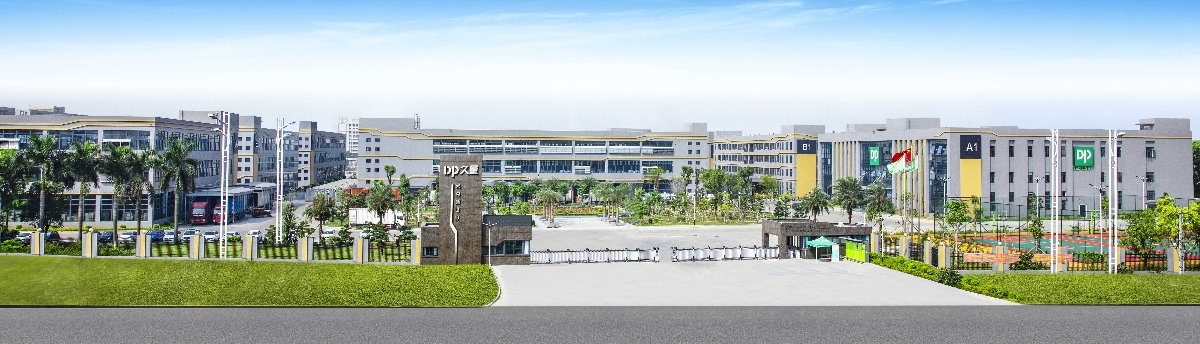
We are DP group, listed company and high-tech enterprise in China, with 4 factories of intelligent manufacturing covering 350,000 square meters. We specialize in LED flashlight, emergency lighting, and other lighting products for over 20 years.
How do you control the products quality?
We will check the products one by one before the bulk packing.
What is your method of payment?
Various payment methods are available, including via PayPal, Visa, MasterCard, Alibaba Trade Assurance and T/T.
30% deposit upon confirmation of the order, 70% balance before shipment or at sight of B/L Copy.
How long does it take to manufacture once an order has been placed?
lt depends on the volume of the order. For most online wholesales orders, we ship within 7 days after we receive the payment.
Is it possible to put our logo on your product or packaging?
Of course, we have a factory that welcome to customize such as your brand, logo, color, product manual, packaging and so on.
Can I come to China to visit your factory?
Welcome to visit our factory in Zhaoqing City, Guangdong, China, and our office in Guangzhou City, Guangdong, China.

